+84 28 8889 9938
info@trivietco.vn
--°C | Đang tải...

For years, governments worldwide have offered generous subsidies to encourage drivers to switch to electric vehicles (EVs). Automakers have restructured factories and expanded EV lineups to meet growing demand. As prices have dropped and technology has improved, zero-emission vehicles have transitioned from niche markets to mainstream adoption, making it seem like the era of internal combustion engines (ICE) could end sooner than expected.
However, in recent years, the transition to EVs has encountered turbulence. Governments have reduced financial incentives for EV buyers, sales growth has slowed, and the automotive industry is reconsidering some of its ambitious investment plans that previously projected a faster shift to electric mobility.
Now, signs suggest that some of these slowdowns may ease, and 2025 could mark a new turning point.
How Has EV Demand Changed?

Global EV sales growth is decelerating. According to BloombergNEF, sales of fully electric and plug-in hybrid passenger vehicles (which can also run on gasoline or diesel) grew by 24% in 2024. This is down from 33% growth the previous year and is only twice the sales volume of 2021.
However, slower growth does not mean no growth. EV sales continue to reach new annual highs, primarily driven by China. BloombergNEF estimates that China accounted for nearly two-thirds of the 17.2 million EVs sold worldwide last year.
In the U.S., EV sales grew by 7% in 2024, with a notable 15% increase in Q4, according to the latest data from research firm Cox Automotive. This surge was partly driven by concerns over potential policy changes under President-elect Donald Trump, which prompted consumers to purchase EVs before possible tax credit removals made them more expensive.
In Europe, the EV shift reversed for much of last year, with combustion-engine vehicles gaining market share. From January to November 2024, sales of battery electric and plug-in hybrid vehicles slightly declined compared to the same period in 2023, with Germany—the continent’s largest market—experiencing a 17% drop, according to data from the European Automobile Manufacturers Association (ACEA).
The first wave of EV adoption was fueled by early adopters who were drawn to the novelty and technological appeal of electric cars. Automakers catered to these buyers by equipping EVs with advanced features that enhanced their prestige.
The next wave of potential buyers is more cost-conscious and often skeptical about EV technology. Many remain hesitant due to concerns about charging infrastructure, particularly in the U.S., where charging stations are concentrated in urban areas and along the East and West Coasts.
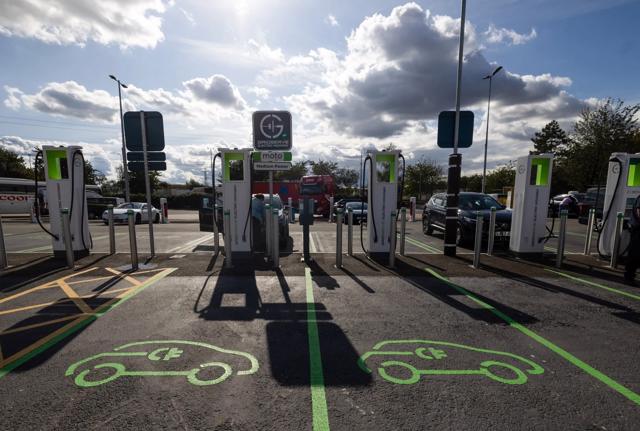
In Europe, weaker sales coincided with the removal of government subsidies. Without these incentives, EVs remain too expensive compared to their combustion-engine counterparts. On average, fully electric cars are 30% more expensive in Europe and 27% more expensive in the U.S.
There are cheaper EV options, particularly in China. However, European and U.S. governments have imposed tariffs and other trade barriers to protect domestic automakers from competition with Chinese EV manufacturers like BYD.
Several automakers, including General Motors, Ford, Mercedes-Benz, Volvo, and Toyota, have scaled back their EV ambitions. Established automakers—those with long histories in internal combustion engine production—now target total EV sales of 23.7 million by 2030, according to BloombergNEF’s latest report from September. This is a reduction of over 3 million vehicles from their 2023 forecasts for the end of the decade.
Even Tesla, the world’s leading pure EV manufacturer, has backed away from its goal of producing 20 million vehicles per year by 2030. Despite nearly surpassing BYD, Tesla saw its first annual sales decline in over a decade in 2024, even though Q4 sales hit record levels.
Amid weaker EV sales, some European automakers have warned that they may face billions of euros in fines if they fail to meet the European Union’s stricter emissions standards. To mitigate penalties, companies are pooling their EV sales with manufacturers like Tesla and Volvo.
Under this arrangement, automakers with lower EV sales can purchase emissions credits from brands that exceed the EU’s carbon dioxide limits. By doing so, lagging companies can average their fleet emissions to remain compliant with the 2025 regulations.
In contrast to these challenges, Chinese automakers have gained a significant advantage in EV technology and are outpacing European brands in China—the world’s largest EV market. Chinese manufacturers have also made inroads into Europe, where they previously had little presence.
The EV transition is a cornerstone of global efforts to combat climate change. However, it also presents a major challenge for the automotive industry, which is crucial to many economies.
Automakers employ hundreds of thousands of workers, as do suppliers like battery manufacturers, who are now struggling with weaker-than-expected EV demand. Northvolt AB, Europe’s most promising battery producer—partially owned by Volkswagen and Goldman Sachs Asset Management—is undergoing restructuring after slowing demand pushed the company to the brink of bankruptcy.
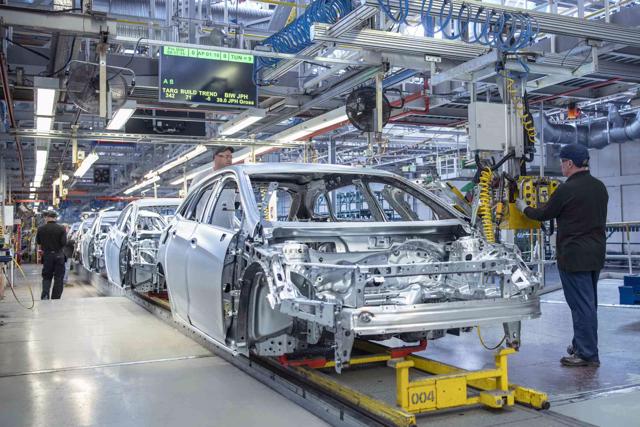
Western governments now face a difficult choice. Allowing more Chinese EV and battery imports would help drive down prices in Europe and North America, stimulating demand. However, this move could also weaken domestic automakers and further cement China’s dominance in future green industries.
Currently, governments on both sides of the Atlantic are imposing stricter import barriers to protect their emerging clean-tech industries from Chinese competition. However, Europe's efforts to build a domestic battery industry to rival China are faltering, with 11 of the 16 planned European-led battery factories either delayed or canceled.
China’s cost advantage is striking, driven by massive production overcapacity. According to BloombergNEF, Chinese battery costs have dropped to $94 per kilowatt-hour, while North American prices are nearly one-third higher and European prices are 48% higher. Additionally, Chinese manufacturers have introduced a new generation of batteries, including solid-state and sodium-ion technologies, which are less prone to catching fire.
While challenges remain, the outlook appears to be improving. BloombergNEF projects that global EV sales will accelerate to 30% growth in 2025. China will continue to lead the market, supported by an expansion of its vehicle scrappage program, which rewards consumers for trading in older, higher-emission cars for EVs.
Meanwhile, other governments, concerned about the recent dip in EV demand, are reconsidering financial incentives for buyers.
Automakers, having already retooled factories for EV production, are nearing the point where they can offer more affordable models to attract hesitant buyers.
European manufacturers are launching cheaper EV models to meet CO2 targets. According to the advocacy group Transport & Environment (T&E), Europe could see seven new EV models priced under €25,000 ($25,738) between 2024 and 2025, including the Renault 5 and Stellantis' Citroën e-C3.
Under T&E’s optimistic scenario, EVs could capture up to 24% of the European market this year—a significant jump from the 13.4% market share they held in the EU during the first eleven months of 2024, according to ACEA data.
Source: VnEconomy Automotive



 Eng
Eng Vie
Vie